Solar Greenhouse
The Solar Greenhouse project initiated in January 2026, explores the integration of photovoltaic systems with protected cultivation, aiming to optimize both electricity generation and crop production. Building on four years of agrivoltaics research in the Southern Arava, this project adapts agrivoltaics to greenhouse systems, which dominate extensive agricultural areas in Israel and many parts of the world. By combining advanced solar technology with greenhouse cultivation, the project seeks to increase energy and agricultural yield per unit area, providing farmers with more sustainable and profitable solutions without changing their cultivation systems.
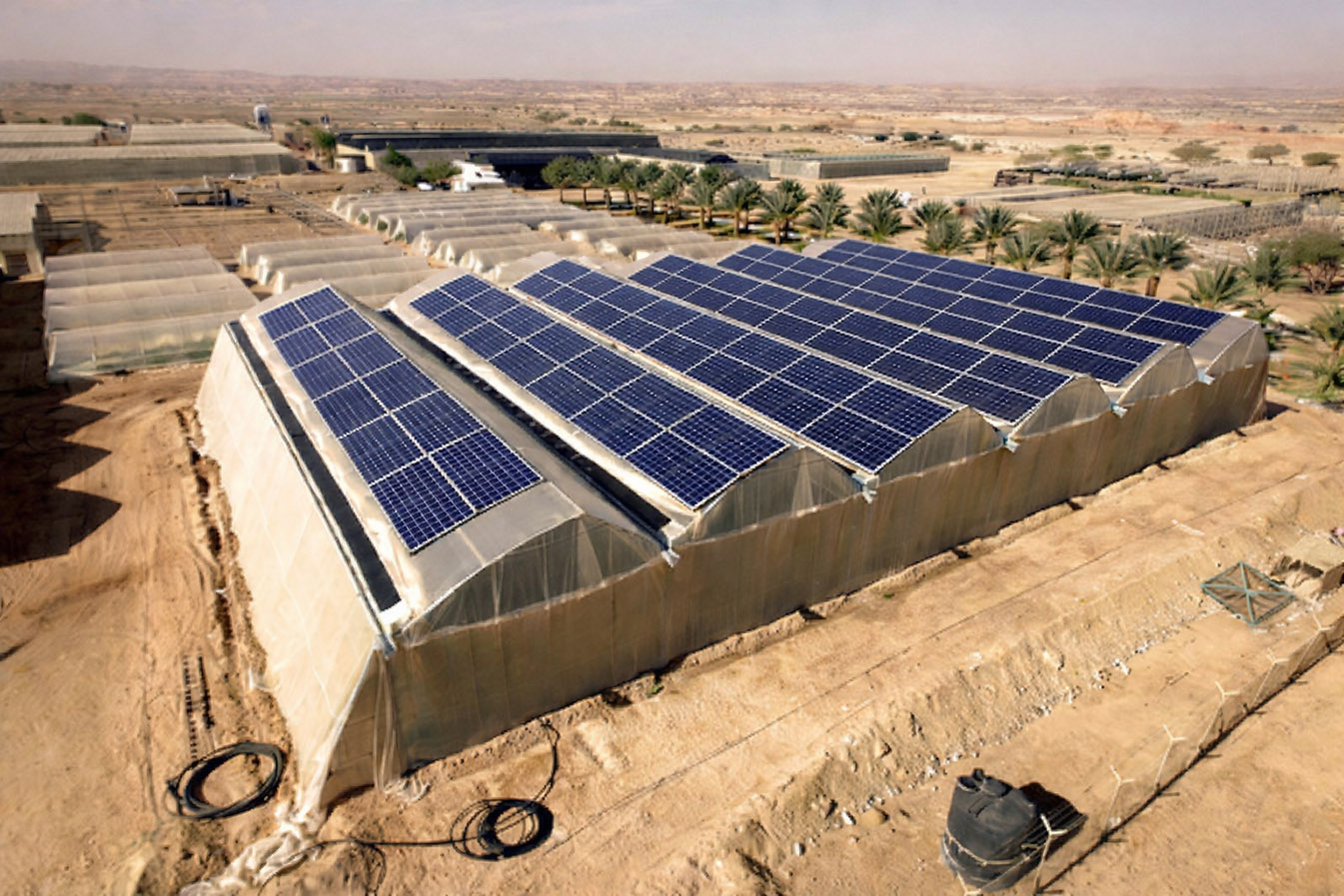
The experiment is being conducted at the Central Arava R&D, comparing greenhouses fully equipped with solar panels to setups with partial coverage (30% of the area) and control greenhouses without panels. The electricity generated by the panels can be used within the greenhouse to power irrigation, cooling, heating, and ventilation systems, reducing reliance on external energy sources and increasing operational efficiency.
Integrating solar panels into greenhouse structures is technically complex because both crops and panels compete for sunlight and space. The system is designed to optimize energy generation during peak solar months, from mid-April to October, without reducing agricultural productivity. By evaluating the balance between electricity production and plant growth, the project provides critical insights into maximizing yield and energy efficiency in protected cultivation systems.
Through this research, the Solar Greenhouse project demonstrates how agrivoltaics can be adapted beyond open-field systems, offering scalable solutions that enhance both food and energy production while supporting the economic and environmental resilience of farmers in Israel and beyond.