Kibwezi Fish Feed Project
In June 2026, we launched a pioneering fish feed research initiative aimed at addressing one of the most pressing challenges in sustainable aquaculture: access to affordable, nutritious, and locally sourced feed. This initiative marks the beginning of a broader effort to strengthen aquaculture systems in resource-constrained settings and improve food security and livelihoods. More than a standalone research project, the work reflects a holistic approach that combines scientific innovation, local production, and capacity building—laying the foundation for scalable solutions that can benefit farming communities in Kenya and beyond.
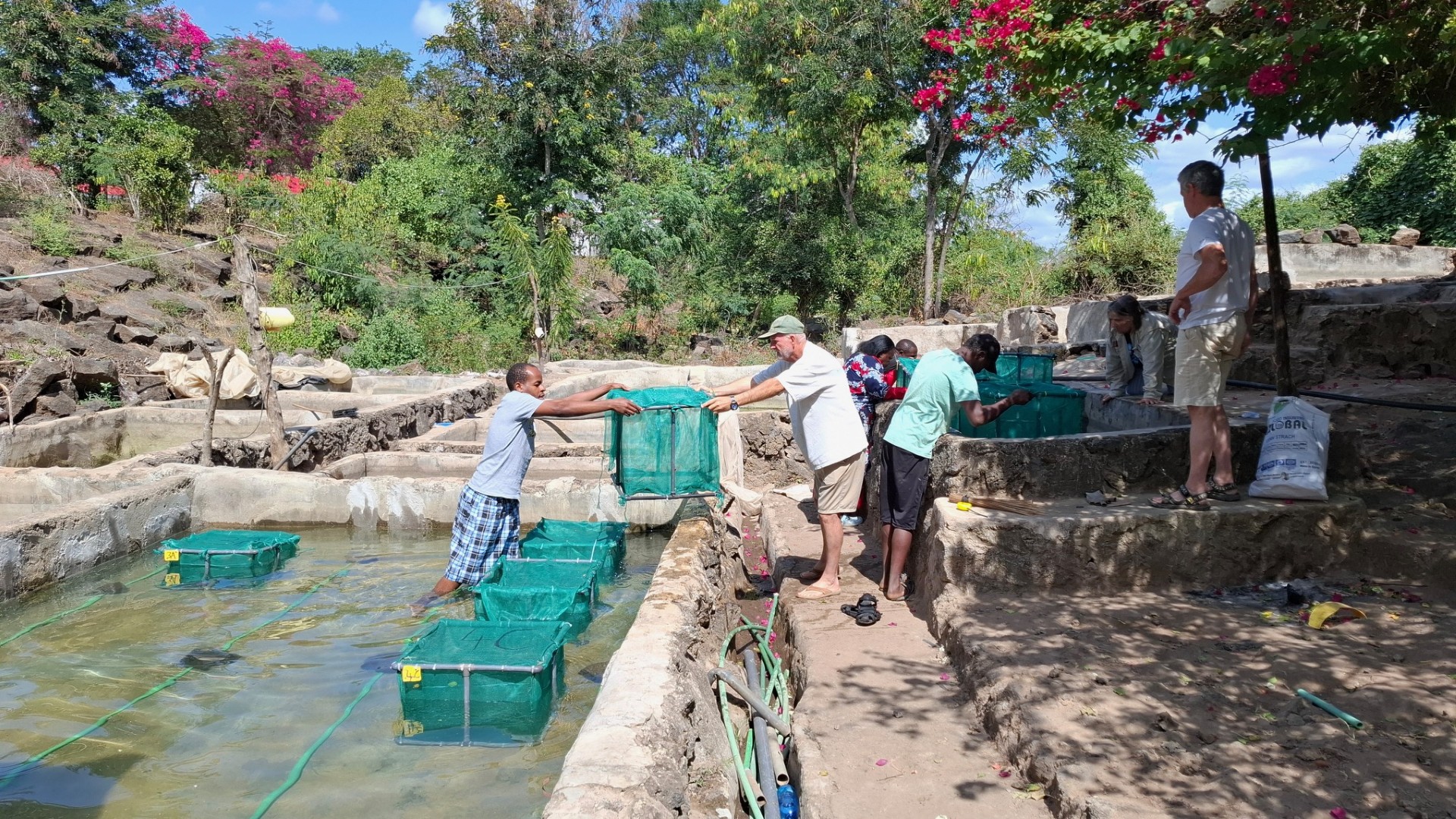
The Fish Feed research project focuses on one of the most significant constraints facing small-scale aquaculture: the high cost and limited availability of nutritious, locally sourced feed. Feed expenses directly affect productivity and profitability, making them a critical barrier to sustainable growth and food security. By developing and testing alternative feed formulations and production approaches, the project seeks to strengthen local aquaculture systems while reducing dependency on imported inputs.
The initiative is designed not only to generate scientific knowledge, but to translate research into practical, scalable solutions. By embedding the research within an active farming environment and emphasizing knowledge sharing and capacity building, the project ensures that insights are accessible, applicable, and relevant to farmers' realities. This approach supports long-term adoption, empowers farmers with new skills, and contributes to more resilient livelihoods.
The research is conducted at an established fish farm that already functions as a regional training and learning hub. This setting was deliberately selected to maximize impact and reach, allowing farmers to engage directly with the research process and observe results in real time. Positioning the project within a well-known training environment supports peer-to-peer learning and helps transform research outcomes into widely shared best practices.
On-the-ground oversight is led by two alumni of the Arava International Center for Agriculture Training (AICAT). Drawing on their hands-on experience in Israel, they serve as a vital bridge between scientific innovation and local implementation. Their ability to adapt advanced aquaculture knowledge to the local context ensures the research remains both rigorous and practical, reinforcing the project's holistic and community-centred approach.
Together, these elements—applied research, strategic site selection, and AICAT-led implementation—lay the foundation for scalable solutions that can strengthen aquaculture systems, improve food security, and create lasting impact for farming communities in Kenya and beyond.